

- Home
- Haulage yard
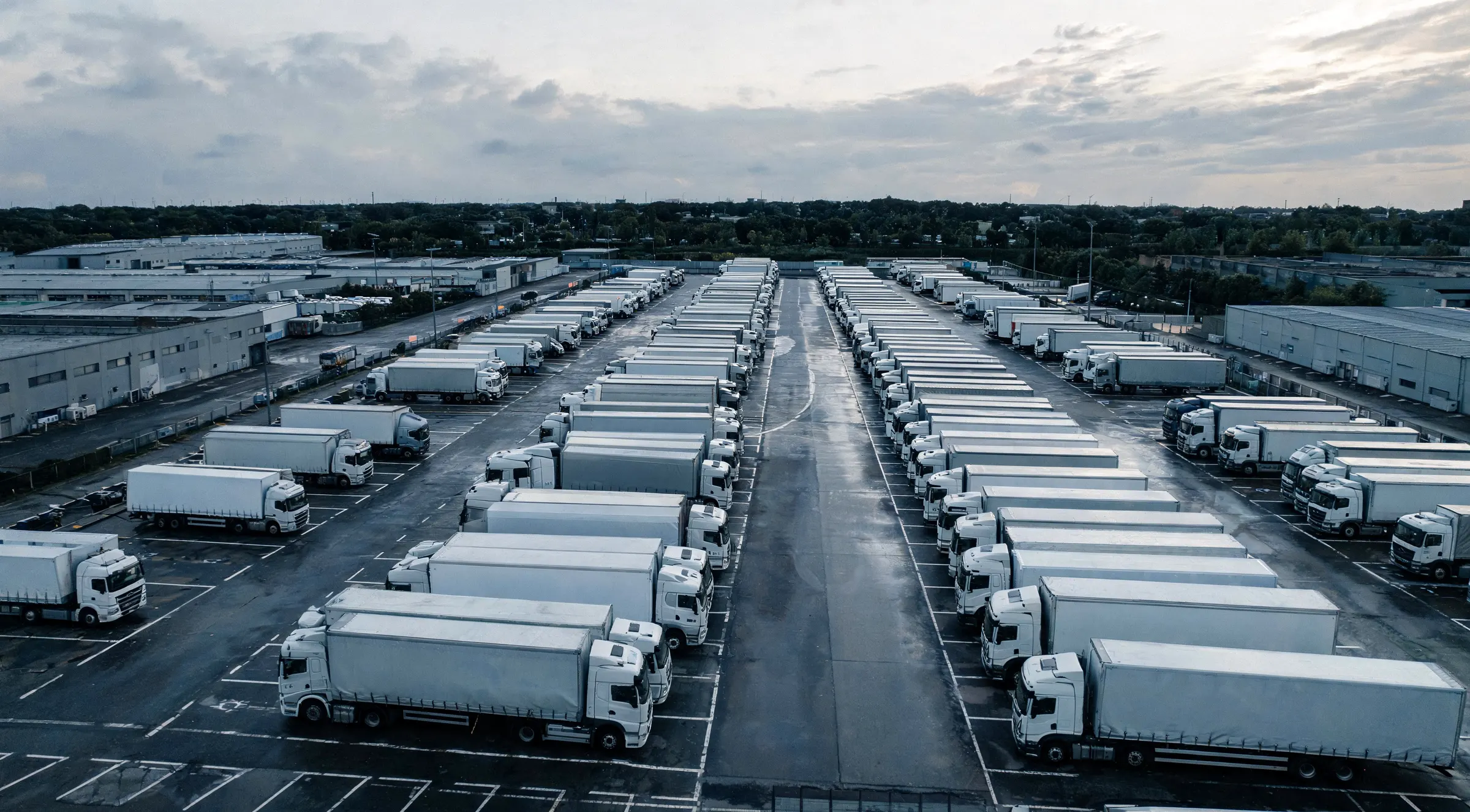
When the yard is full and the runs get longer
A second site costs more than rent: it costs transfer runs every day. The room you need is already in your yard, just one level up.
- ×4
- parking spaces on the same area, counted at four levels
- 15 min
- less shunting
- 0 m²
- newly sealed ground
What a full yard costs
Lack of space rarely shows up in the accounts. It shows up in the runs, in the shifts and in staff turnover.
The second site rides along
Every vehicle parked somewhere else has to be driven there and back, morning and evening.
Our answer Parking is created where the operation already is. The transfer run disappears, not just the rent.
Shunting eats into the shift
On a tight yard a noticeable share of driving time goes into parking.
Our answer Straight into the handover station, step out, done. Around 15 minutes per vehicle, every day, on every run.
The load stands in the open
Whatever does not fit on the yard ends up at the roadside or in a lay-by.
Our answer Access-controlled and enclosed. Whoever calls up the vehicle is logged.
This is what changes in your yard
Both designs expand capacity and simplify parking. Together we can find which benefits matter most at your site.
-
More spaces, same area
Four levels instead of one. Your yard holds a multiple without a single square metre being added.
-
Operations stay where they are
No extra land to buy, no move to the outskirts, no longer runs.
-
The load is secure
Access-controlled and enclosed instead of on the hard shoulder or an open lay-by.
-
Shunting disappears
Straight in, step out, done. Around 15 minutes per vehicle, every day, on every run.
-
Charging at the space
A charging point at every space, and load management spreads the power across the night.
-
Fully integrated into your operations
The facility fits into the processes you already run. It is built on ground that has long been paved.
What to weigh against what
The honest alternative to a facility is not doing nothing, it is a second site. The two can be compared once every item is on the table.
On one side is the second site: lease or purchase price, groundworks, fencing, lighting, cameras, and then the daily transfer runs between the two yards. Those runs cost driving time, diesel or electricity and staff, and they appear on no rent invoice.
On the other side is the facility on land you already own: one investment, no second yard, no second entrance, no second set of keys to manage. Plus the time shunting costs you today.
Which side wins depends on your layout, your number of vehicles and how far away the second site is. Send us both and we will work it through with you. A blanket figure would be worthless here.
Three questions from hauliers
Does this fit how we work?
A system that rebuilds the working day does not get used.
Our answer The driver pulls straight into the handover station and steps out. Everything else happens afterwards. Construction is on ground that was paved long ago.
What about special vehicles?
Not every fleet consists of standard semi-trailer trucks.
Our answer From tractor units through swap bodies to roll-off containers, much of it is already planned for. Give us length, width and gross vehicle weight and we will tell you whether and how the vehicle can be stored.
How fast is the vehicle out again?
A parking space is worth nothing if the vehicle is not ready in time in the morning.
Our answer On a schedule it is waiting at the agreed time. On demand, retrieval takes up to 1.5 minutes per vehicle.
How many parking spaces are in your yard?
Send us your site plan and your fleet. We will assess, without obligation, what capacity a Tower or a Stack would allow.
Phone +49 7251 9760 620
Email [email protected]